
The Alcohol Compliance Training (ACT) program, developed by the National Liquor Law Enforcement Association (NLLEA) and the National Alcohol Beverage Control Association (NABCA), is setting a new national standard for alcohol enforcement and compliance. More than a training program, ACT represents a coordinated, forward-looking approach to strengthening regulatory consistency, supporting community safety, and equipping both regulators and licensees with the tools they need to prevent violations before they occur.
The Challenge Facing Communities
Communities across the country are facing a rapidly changing alcohol marketplace and increasingly complex public safety challenges. Longstanding issues such as underage drinking, over-service of alcohol, impaired driving, fake IDs, nuisance establishments, illegal alcohol sales, and organized criminal activity continue to strain law enforcement resources. At the same time, new products and business models including ready-to-drink beverages, direct-to-consumer shipping, and CBD- and THC-infused products are reshaping the regulatory landscape faster than laws and training systems can keep pace.
Alcohol Law Enforcement (ALE) today sits at the intersection of public safety, public health, and regulatory oversight. Yet, despite the growing importance of this work, many officers across the country receive limited or inconsistent training in alcohol law enforcement. Differences in resources, priorities, and training standards have created gaps in knowledge and uneven enforcement, making it harder to prevent harm, protect communities, and ensure a fair and well-regulated marketplace.
Stakeholder Roundtable
Recognizing these challenges, NLLEA, in partnership with NABCA, brought together law enforcement leaders from across the country to assess what is happening in the field and what is needed going forward. These conversations confirmed what many agencies were already experiencing: the need for specialized, modern, and consistent training in alcohol law enforcement has never been greater.
Needs Assessment
To ensure that the solution was driven by real-world needs, NLLEA and NABCA conducted a national needs assessment of alcohol law enforcement agencies. The results revealed a demanding and fast-changing environment. Agencies are overseeing more licensed businesses with fewer resources, navigating frequent legislative changes, confronting illegal and unlicensed sales, and increasingly encountering organized criminal activity tied to alcohol-related venues. Many also reported growing concerns about underage access, overservice, and unregulated products, along with a gradual erosion of enforcement capacity at the local level.
At the same time, the traditional alcohol regulatory system is under pressure. Direct-to-consumer shipping, hybrid retail models, and post-pandemic changes in how alcohol is sold and delivered are transforming the industry. Law enforcement agencies are also being asked to take on new responsibilities related to hemp- and marijuana-derived products, often without additional staff or funding. Together, these realities make it clear that a modern, standardized, and nationally coordinated training system is no longer optional. It is essential.
In response, NABCA, NLLEA, and their partners are building the first truly national, standardized Alcohol Law Enforcement training framework, anchored by the ACT program. This comprehensive curriculum prepares officers to handle everything from routine license inspections to complex investigations involving hidden ownership, organized crime, money laundering, and human trafficking. It covers regulatory compliance, enforcement techniques, investigative practices, community engagement, and the critical connection between administrative and criminal enforcement.
The program is delivered by experienced, highly qualified ALE professionals who have completed a rigorous Training of Trainers program, ensuring consistent quality and real-world relevance nationwide. Training sessions are continuously evaluated to maintain high standards and measurable impact.
A Collaborative, Community-Based Model
A defining feature of ACT is its commitment to collaboration. Effective alcohol law enforcement does not happen in isolation. The program emphasizes partnerships among ALE agencies, local and state law enforcement, public health professionals, community leaders, and the hospitality and retail industries. By working together, these groups can improve compliance, target serious criminal activity, and develop long-term, community-based solutions that go beyond enforcement alone.
With the support of NABCA, this national training initiative is being rolled out over multiple years to reach agencies across the United States. This investment is building a more professional, consistent, and effective alcohol law enforcement system, one that improves public safety, supports responsible businesses, and strengthens trust between regulators, law enforcement, and the communities they serve.
The vision is simple and powerful: a unified, modern Alcohol Law Enforcement training system that protects communities, reduces harm, and ensures a safer and more responsible alcohol marketplace nationwide.
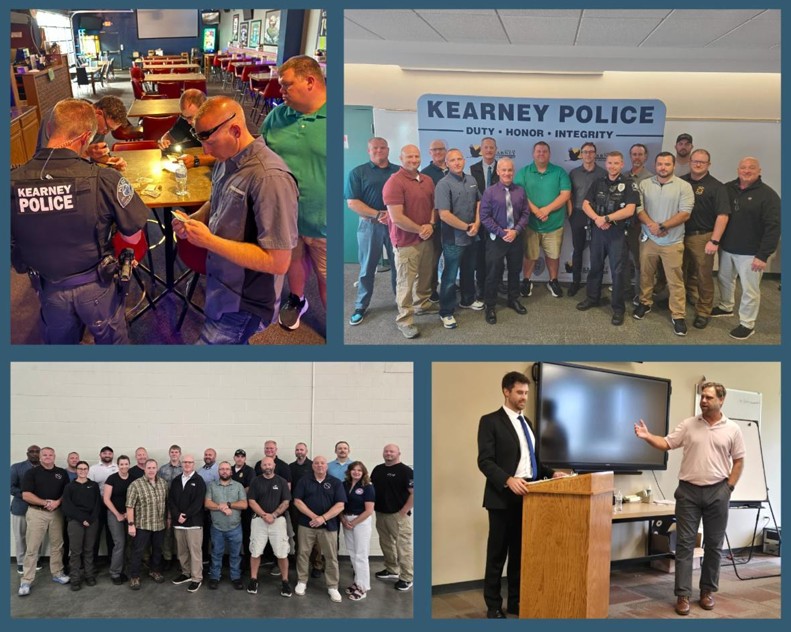 Nebraska Hosts Pilot of NLLEA’s ACT Program in September 2025
Thirty-one officers from 16 agencies completed two days of liquor law enforcement training organized by the National Liquor Law Enforcement Association (NLLEA) and Project Extra Mile, with support from the Nebraska Department of Transportation – Highway Safety Office and the National Alcohol Beverage Control Association (NABCA). The training focused on reducing alcohol-related crime and improving compliance at licensed establishments.
Hosted by the Kearney Police Department, Buffalo County Sheriff’s Office, and the Omaha Public Safety Training Center, the course covered topics including compliance checks, nuisance establishments, premise inspections, human trafficking, and sales to intoxicated or underage patrons.
The training was led by Todd Merlina of the Pennsylvania Liquor Control Board and Israel Morrow of the North Carolina Alcohol Law Enforcement Division. Special thanks to Fanatics in Kearney for providing access to the establishment for a hands-on premise inspection exercise led by the Nebraska State Patrol.
Partnering for Progress: How NLLEA and Its Member Agencies Are Tackling Emerging Trends and Enforcement Challenges
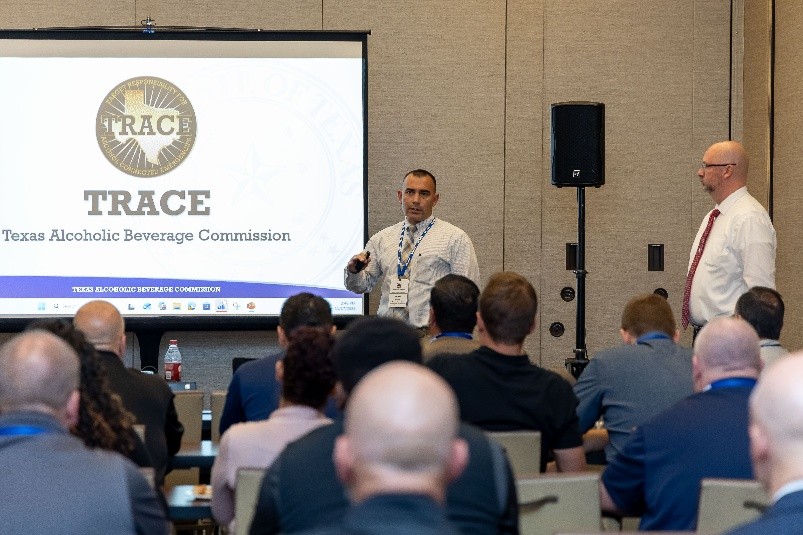
Lt. Robert Coulter, Texas Alcoholic Beverage Commission - Target Responsibility for Alcohol-Connected Emergencies (TRACE) program
Partnering for Progress highlights how the National Liquor Law Enforcement Association (NLLEA) and its member agencies are working alongside regulatory partners like NABCA to stay ahead of a rapidly evolving alcohol marketplace. From the growth of third-party delivery and Ready-to-Drink (RTD) products to the emergence of hemp-derived beverages and increasingly complex compliance schemes, alcohol regulation today requires constant coordination, shared intelligence, and modernized enforcement strategies. Through collaboration, training, and innovation, NLLEA and its members are helping ensure regulation keeps pace with industry change while never losing sight of public safety and the integrity of alcohol control systems.
Across the country, alcohol law enforcement and regulatory agencies are seeing consistent patterns of violations from both the public and licensed businesses. Common public-facing violations continue to include underage possession and consumption, use of false or altered identification, public intoxication, and open container violations. On the retail side, agencies most frequently encounter sales to minors, sales to visibly intoxicated patrons, improper delivery practices particularly involving third-party services along with recordkeeping, licensing, and unauthorized or after-hours sales. Together, these issues underscore the ongoing need for proactive compliance checks, education, and coordinated enforcement.
Increasingly, however, alcohol enforcement goes far beyond routine regulatory violations. Agencies now regularly encounter serious and complex criminal activity connected to alcohol availability and licensed locations. Investigations include TRACE-back cases stemming from impaired driving crashes, where officers track the source of alcohol involved in serious injury or fatal incidents. Licensed establishments have also been linked to human trafficking, gun, and gang violence, and organized criminal activity. Enforcement efforts uncover illegal gambling operations, unlicensed outlets, and large-scale underage drinking parties that escalate into assaults and weapons offenses. These cases reinforce the critical role alcohol law enforcement plays in protecting communities and preventing alcohol from serving as a catalyst for the most dangerous crimes.
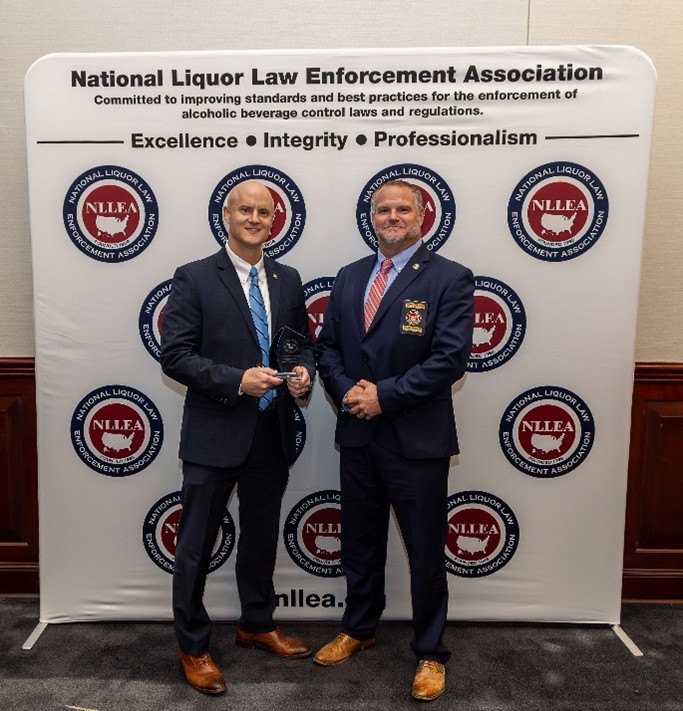
l/r Bryan House, Director and Israel Morrow, Assistant Director for Operations
North Carolina Department of Public Safety Alcohol Law Enforcement Division
Persistent High-Risk Violations: Minors & Overservice
Despite the changing landscape, two violations remain constant nationwide: sales to minors and sales to obviously intoxicated patrons. Selling alcohol to underage buyers is consistently the most frequently cited violation during compliance checks, often due to failures to check ID, acceptance of fake IDs, or illegal third-party purchases. Overservice continues to fuel impaired driving, assaults, and serious injuries, and while it can be more difficult to detect and prove, it remains a top enforcement priority because of its direct impact on public safety.
Persistent High-Risk Violations: Minors & Overservice
Sales to minors and serving obviously intoxicated patrons remain the two most common and dangerous alcohol violations nationwide. Together, they continue to drive impaired driving, violent incidents, and serious public safety risks making them a top enforcement priority.
Common Retail Compliance Violations
Beyond these high-risk violations, agencies consistently encounter routine but consequential compliance failures. Retailers are frequently cited for operating outside licensed hours, selling without a valid license, continuing operations after suspension or expiration, and failing to maintain required records or postings. Improper promotions or drink specials that encourage excessive consumption also remain a concern in many states. While these violations may appear administrative, they are essential to maintaining accountability and the integrity of the regulatory system.
Common Retail Compliance Violations
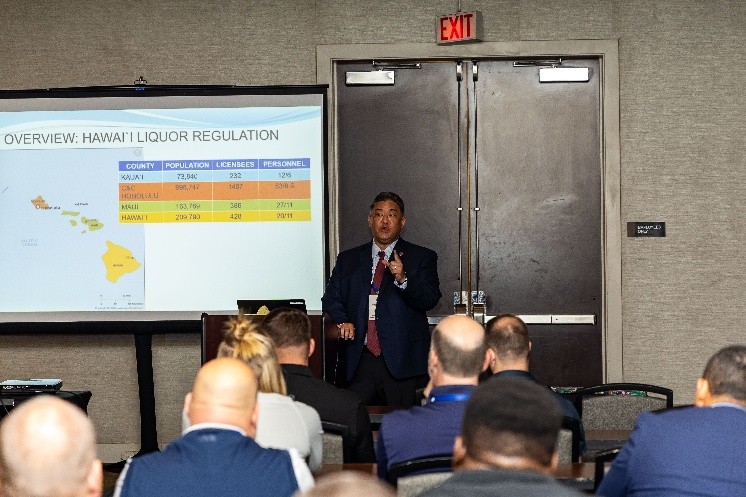
Brandon Gonzalez, Administrative Officer Department of Liquor Control County of Hawaii
- Selling alcohol outside permitted hours or without a valid license
- Continuing sales after license suspension, revocation, or expiration
- Missing or incomplete records and required postings
- Improper license display
- Promotions that encourage overconsumption
Illegal alcohol sales and distribution also remain a persistent problem, particularly at special events, festivals, and pop-up venues where vendors may operate without proper permits. These environments often coincide with fake ID use, underage possession, and unauthorized sales activity, reinforcing the need for strong licensing oversight and coordinated event enforcement.
Public-generated violations further stretch enforcement resources. Underage drinking, fake IDs, shoulder-tap purchases, and large gatherings involving alcohol continue to drive complaints and large-scale operations. At special events, agencies also confront illegal vendor activity and health and safety violations tied to alcohol service. These challenges highlight the importance of visible enforcement, education, and community partnerships.
Why These Trends Matter
These trends matter because they directly impact public safety. Overservice and sales to minors contribute to impaired driving, violence, and preventable injuries. Consistent enforcement of licensing and operational rules maintains public trust in regulatory systems. Just as importantly, education and compliance training reduce repeat violations and help create safer communities and a more responsible alcohol marketplace.
The Challenge of a Rapidly Changing Marketplace
The modern beverage marketplace is evolving faster than ever. RTD products require close monitoring of age verification, ABV limits, and public consumption rules. Hemp and cannabis-derived beverages introduce regulatory overlap and classification challenges. Innovative product formulations and “functional” alcohol beverages further complicate labeling, taxation, and marketing oversight. Together, these trends demand proactive agencies, updated guidance, and modern enforcement tools.
How NLLEA and Its Members Are Responding
Technology-Driven Enforcement & Compliance
Agencies are adopting digital licensing systems, data analytics, and modern inspection tools to better target high-risk licensees and emerging problems. New impairment detection technologies and digitally integrated testing devices are also strengthening DUI enforcement and public safety initiatives.
Expanded Regulatory Scope & Legislative Evolution
States are adapting laws to address hemp-derived products, third-party delivery, direct-to-consumer shipping, and digital payments in alcohol transactions, ensuring stronger audit trails and better compliance monitoring.
Enforcement Philosophy & Community Engagement
Today’s alcohol enforcement increasingly recognizes that achieving compliance is the goal. Education, training, and partnership with licensees now complement traditional enforcement while targeted action continues against criminal enterprises, nuisance locations, and illegal operators.
Evolving Training & Professional Development
NLLEA provides modern training, webinars, and professional development resources to help officers and regulators keep pace with changing laws, products, and enforcement tools supporting both field enforcement and regulatory oversight.
Public Safety & DUI Law Advancements
Enhanced DUI laws, expanded ignition interlock programs, and advanced impairment detection technologies are key tools in reducing alcohol-related crashes and fatalities. Alcohol law enforcement agencies play a vital role in implementing these measures, ensuring compliance with the law, and holding offenders accountable. By combining rigorous enforcement with proactive compliance strategies, agencies not only protect the public on the road but also reinforce a culture of responsible alcohol consumption and community safety.
Key Takeaways for Regulators and Enforcement
- Digital tools and data analytics are now essential
- Education and collaboration prevent violations before they occur
- Innovation in products and sales models requires constant adaptation
- New enforcement technologies are reshaping public safety efforts
- Training and outreach remain foundational to long-term compliance
Coming Up in Week 4: A Flagship Partnership – ACT
Discover how the Alcohol Compliance Training (ACT) program, developed by NLLEA and NABCA, is setting the standard for nationwide alcohol enforcement and compliance. Learn how this innovative program strengthens regulatory consistency, supports community safety, and equips both regulators and licensees with tools to prevent violations before they occur. Stay tuned to see how ACT is transforming alcohol law enforcement into a proactive, collaborative effort.
Inside the Work of NLLEA
Advancing Alcohol Law Enforcement Through Collaboration, Leadership, and Innovation
The National Liquor Law Enforcement Association (NLLEA) is widely known for bringing together alcohol law enforcement professionals from across the country but what many outside the organization may not realize is just how much work happens year-round behind the scenes to advance the profession, support agencies, and strengthen public safety.
At the heart of that work are NLLEA’s committees, leadership forums, and special projects each driven by members who volunteer their time and expertise to move the mission forward.
Professional Development Committee
Building the Future of Alcohol Law Enforcement
Where training, standards, and the future of the profession come together.
The Professional Development Committee is one of NLLEA’s most active and impactful groups. This committee focuses on identifying training gaps, developing new educational programs, and ensuring that alcohol regulatory enforcement professionals have access to relevant, high-quality instruction.
From shaping national conference programming to supporting major initiatives like the Alcohol Compliance Training (ACT) program developed in partnership with NABCA, this committee plays a critical role in modernizing and professionalizing alcohol law enforcement training nationwide.
Why It Matters to Agencies
✔ Better-prepared officers
✔ More consistent enforcement practices
✔ Stronger public trust
✔ Training that reflects today’s real-world challenges
Chiefs and Directors Meetings
A National Leadership Table
A trusted forum for the leaders shaping alcohol enforcement nationwide.
NLLEA’s Chiefs and Directors Meetings provide a unique and much-needed space for agency leaders to connect, collaborate, and problem-solve. These meetings bring together decision-makers from state, local, and tribal agencies to discuss emerging trends, legal challenges, staffing issues, and policy concerns affecting alcohol regulation and public safety.
Just as importantly, these meetings build lasting professional relationships that extend far beyond the meeting room.
What Chiefs & Directors Gain
• Peer-to-peer problem solving
• Early insight into national trends
• Shared solutions to common challenges
• A confidential, trusted leadership network
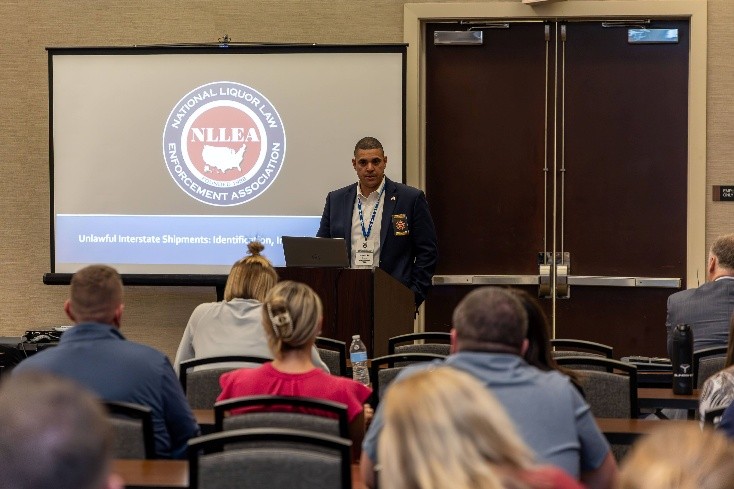
Christopher Temple, Supervising Special Investigator, Massachusetts Alcoholic Beverages Control Commission
Direct-to-Consumer (DTC) Committee
Working Ahead of the Curve
Focused on one of the fastest-changing areas in alcohol regulation.
As shipping, e-commerce, and alternative alcohol products continue to evolve, the Direct-to-Consumer Committee focuses on one of the most complex and rapidly changing areas of alcohol regulation today.
This committee tracks trends, shares intelligence, examines enforcement models, and helps agencies prepare for the future of DTC shipping and compliance rather than reacting after problems arise.
Key Focus Areas
• DTC shipping compliance
• E-commerce enforcement challenges
• Emerging product categories
• Regulatory consistency across states
Special Projects
Turning Ideas into Action
Where innovation meets real-world enforcement needs.
In addition to standing committees, NLLEA regularly forms project-based working groups to address emerging issues, pilot new initiatives, and respond to shifts in the alcohol marketplace and enforcement environment.
These projects such as national training frameworks, improved information-sharing tools, and cross-agency initiatives allow NLLEA to stay agile, relevant, and forward-focused.
“Some of NLLEA’s most important work starts as a simple idea and becomes a national solution.”
NLLEA Awards Program
Recognizing Excellence. Elevating the Profession.
Honoring the agencies and individuals setting the national standard.
An essential part of NLLEA’s mission is not only advancing alcohol law enforcement but recognizing the exceptional work being done across the country. The NLLEA Awards Program does exactly that by shining a national spotlight on agencies, officers, and programs that demonstrate outstanding leadership, innovation, and service.
Each year, these awards highlight the very best of the profession and share success stories that can inspire and inform agencies nationwide.
The awards are presented at the NLLEA Annual Conference and represent peer recognition from professionals who understand the complexity and impact of this work.
NLLEA Annual Award Categories
🏆Alcohol Law Enforcement Agency of the Year - Recognizes an agency that demonstrates exceptional leadership, performance, and impact in alcohol law enforcement and public safety.
👮Alcohol Law Enforcement Agent of the Year - Honors an individual officer or investigator whose dedication, professionalism, and achievements exemplify the highest standards of the profession.
💡Innovative Alcohol Law Enforcement Program of the Year - Recognizes a creative, forward-thinking program or initiative that improves enforcement effectiveness, compliance, or public safety.
🤝John W. Britt Community Service Award - Honors outstanding commitment to community service and public outreach, recognizing efforts that strengthen trust and partnerships between agencies and the communities they serve.
🎖Meritorious Service Award - Recognizes sustained, exemplary service and significant contributions to alcohol law enforcement and to NLLEA’s mission.
These awards do more than celebrate success they create a national platform for sharing best practices, innovative ideas, and proven strategies that other agencies can adapt and build upon.
“Every award tells a story, and those stories help move the entire profession forward.”
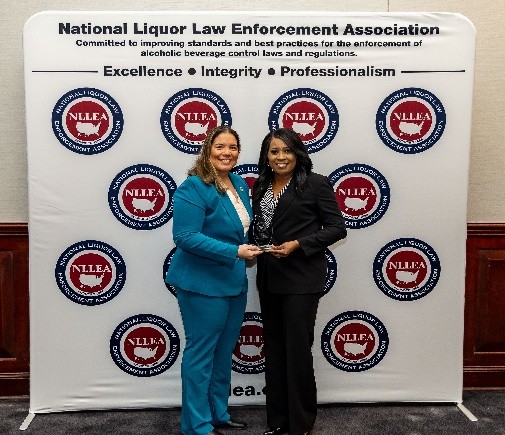
(l-r) Florida Department of Business and Professional Regulation Division of Alcoholic Beverages & Tobacco was selected for this year's Innovative Alcohol Law Enforcement Program of the Year Award.
Why This Matters
By highlighting excellence, the NLLEA Awards Program:
• Reinforces professional standards and pride
• Encourages innovation and leadership
• Shares replicable success stories nationwide
• Recognizes the often-unseen impact of alcohol law enforcement
• Strengthens morale and agency culture
Why This Matters to Agencies Not Yet Involved
More than membership. More than meetings. A working network.
For agencies and professionals not yet engaged with NLLEA, what may be most surprising is that the association is not just a conference or a membership list, it is an active, working network of practitioners shaping the future of alcohol law enforcement.
“NLLEA is where the profession comes together to solve problems before they become crises.”
What Membership Provides
✔ Access to national expertise
✔ A voice in shaping training and best practices
✔ Leadership development opportunities
✔ Early awareness of emerging challenges
✔ A seat at the table on national initiatives
A Mission Powered by Members
Most importantly, NLLEA is built by and for the professionals doing this work every day. Its committees, meetings, and projects exist because members step forward to contribute their experience, knowledge, and leadership.
As alcohol regulation continues to grow more complex, the work being done inside NLLEA has never been more important and the door is always open for new agencies and professionals to be part of that mission.
“The strength of NLLEA isn’t in its structure it’s in its people.”
ABOUT NLLEA
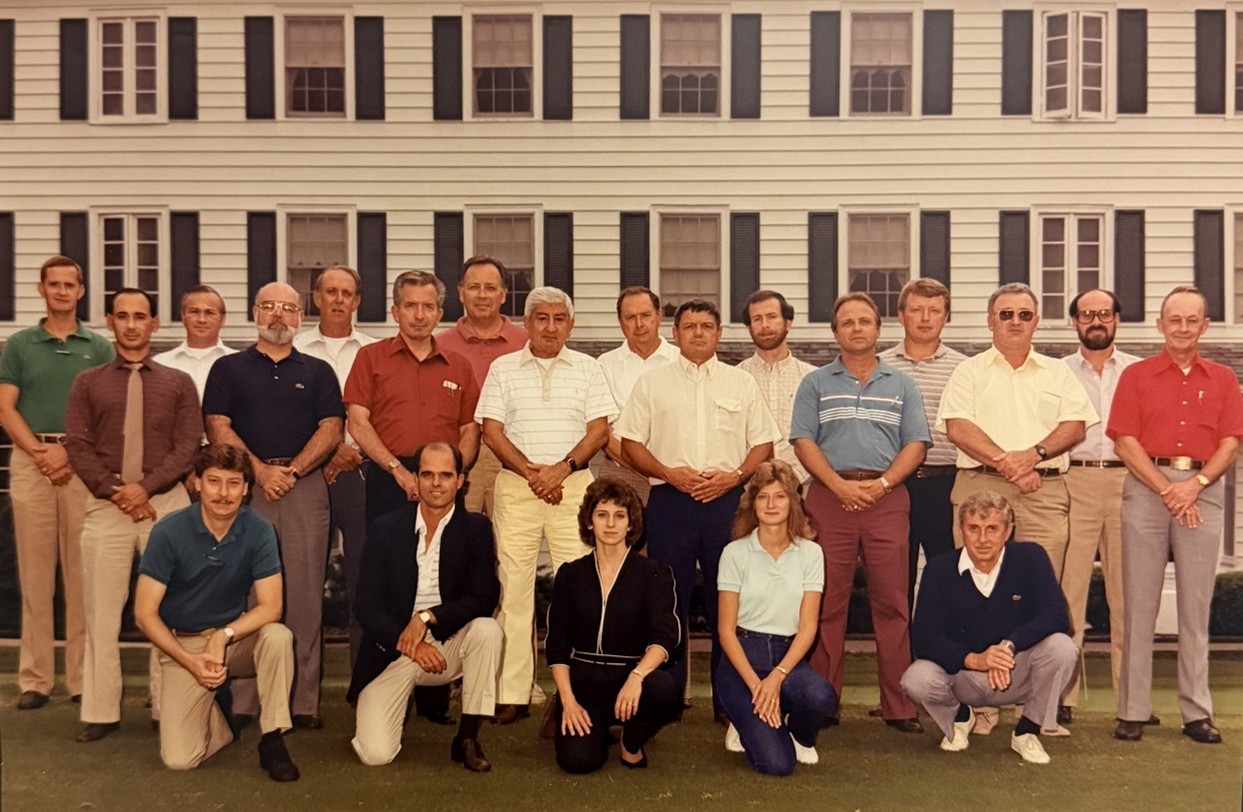
Founding NLLEA Members
(left to right standing) Tom Parker (NC), Dennis Theoharis (MD), John Shimko (PA), John Britt (NC), Richard Evans Sr. (OR), David Goyette (WA), Don Murray (NC), Robert L. Garian (VA), \James Longerbone (OH), Ray Little (VA), Michael Reed (OR), Jimmy Sullivan (MS), James Mahoney (MD), John Wright (VA), Chris Curtis (VA), Richard White Sr. (VA) (left to right kneeling) Bill Patterson (NC), Randy Martin (MI), Holly Pomelow (ME), Diane Bumgardner (NC), and Roger Rosendale (MI) missing from photo-John S. Martin (ME)
National Liquor Law Enforcement Association (NLLEA) was established to create a national forum for leaders in alcohol beverage control and liquor law enforcement to collaborate, share expertise, and strengthen enforcement efforts nationwide. What began as a small, dedicated organization of alcohol enforcement directors meeting annually to address common challenges and provide foundational training for officers new to Alcohol Regulatory Enforcement (ARE) has grown into a respected national association representing a broad cross-section of federal, state, tribal, and local agencies. NLLEA’s formation was rooted in the recognition that alcohol regulation plays a critical role in public safety, and its rich history reflects decades of leadership, professionalism, and commitment to advancing effective and consistent alcohol law enforcement across the country.
What is now known as the NLLEA began in 1987 with a meeting and conference then referred to as the Control States ABC Conference. Held in North Carolina, the inaugural gathering brought together participants from 10 states, laying the groundwork for a national organization focused on alcohol law enforcement. The first official annual meeting and conference under the NLLEA name took place in 1988 in Maine, where members formally adopted the Association’s constitution and by-laws. The momentum continued in 1989 with the second annual meeting and conference in South Carolina, the same year NLLEA was formally incorporated, solidifying its role as a national leader in alcohol regulatory enforcement collaboration and professional development.
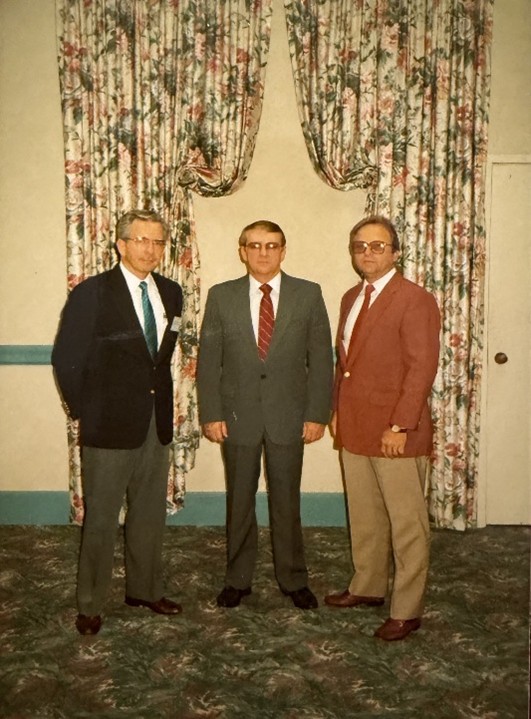
First NLLEA Officers 1988-89
(left to right) David Goyette (WA), Vice President, John S. Martin (ME), President, and Jimmy Sullivan (MS), Secretary-Treasurer
Today, NLLEA is governed by an elected Board and is recognized as a national leader in advancing the professionalism, effectiveness, and visibility of alcohol law enforcement as a critical component of public safety. Members benefit from real-time information sharing, research and policy resources, professional development opportunities, and an annual conference that brings together more than 250 enforcement, association, and public health professionals from across the country.
While the NLLEA was founded in 1987, for the first 15 years, it was primarily an organization comprised of the directors of alcohol beverage control enforcement agencies who met once a year for an annual conference and provided a one-week training academy for line officers new to Alcohol Law Enforcement (ALE).
The NLLEA now has a more sophisticated communications system that allows for the provision of real-time information to its members on recent ALE efforts and challenges, along with a wealth of research summaries, publications, and information on liquor law enforcement on the NLLEA website.
A central tenet of the NLLEA’s mission is to elevate the standards of liquor law enforcement and foster interagency collaboration. To this end, the Association provides best practice guidance on alcohol-related laws, policies, and enforcement protocols. NLLEA advocates for robust regulatory systems that rely on fully sworn liquor control officers, professionals with the training, authority, and expertise to enforce alcohol laws through both criminal and administrative mechanisms. The Association also maintains active partnerships with national, state, and LLE bodies, alcohol research institutions, public health organizations, and responsible industry representatives to promote evidence-based practices and public safety outcomes.
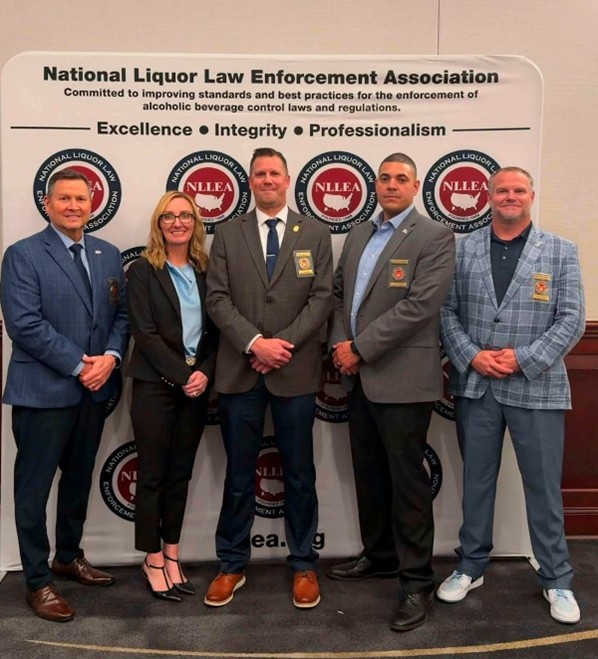
2025-26 NLLEA Executive Board
(left to right) Jim Diana (DE), Immediate Past President, Kellette Mayberry (OH), Vice President, Marc Haalman (VA), President, Chris Temple (MA), Secretary/Treasurer, and Israel Morrow (NC), Sgt.-at-Arms
Between 2001 and 2011, the NLLEA, in partnership with the Pacific Institute for Research and Evaluation (PIRE), implemented a series of federally funded demonstration projects aimed at preventing impaired driving and underage drinking. These initiatives, primarily supported by the National Highway Traffic Safety Administration (NHTSA), involved comprehensive legal research on alcohol policies, interviews with state Alcoholic Beverage Control (ABC) agency leaders, and the development and testing of innovative enforcement strategies. Early research efforts culminated in three major NHTSA publications, which informed subsequent demonstration projects that tested specific interventions, including the enforcement of happy hour laws in Texas, the use of Place of Last Drink (POLD) data in Washington and New Hampshire, compliance checks and media advocacy in Ohio, security staff training in Denver, and case studies on source investigations and social host laws.
Following its transition to a self-sufficient nonprofit organization in 2012, NLLEA completed additional NHTSA-funded projects between 2012 and 2025. These included: the development of source investigation protocols in partnership with Indiana and Massachusetts and the creation of an accompanying online toolkit; impaired driving crackdowns in Virginia, New Hampshire, and South Carolina focused on over-service enforcement during high-risk periods; a study on State Highway Safety Office (SHSO) funding models across seven ALE agencies resulting in a practical guide; pilot projects in Iowa, Missouri, and Vermont to demonstrate the utility of POLD data; an implementation study of POLD practices in Vermont; and a pilot initiative focused on alcohol delivery compliance in Colorado, Connecticut and Louisiana.
Beyond NHTSA collaborations, NLLEA has also partnered with the National Alcohol Beverage Control Association (NABCA) on grants to support webinars, conference planning, and audits of direct-to-consumer alcohol shipping practices. Additionally, NLLEA has actively contributed to the Sober Truth on Preventing (STOP) Underage Drinking Act since 2010 by analyzing enforcement policies, compiling agency protocols, advising on policy surveillance efforts, and contributing data and insights to the annual Report to Congress.
NLLEA operates under the leadership of a single full-time staff member, supported by a volunteer Board of Directors and an active Professional Development Committee. Despite its small staff size, the organization has demonstrated consistent growth, robust fiscal oversight, and a strong record of delivering impactful national training and public safety initiatives.